
How To Maintain And Clean Kitchen Accessories To Extend Their Lifespan
Date Posted:3 February 2026

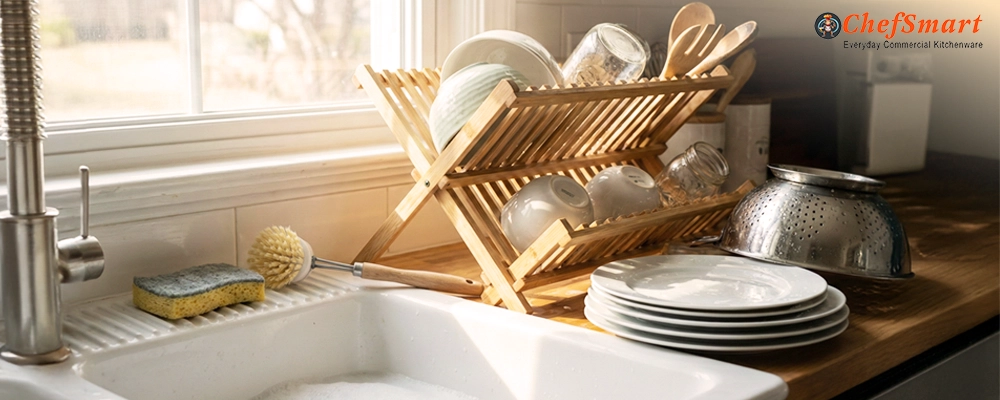
In any commercial kitchen, the quality of your tools only matters as long as they're properly maintained. A chef who invests in quality tongs, whisks, ladles, and prep equipment — and then neglects routine care — will find those tools failing faster than budget alternatives that are well looked after. For hospitality operators in New Zealand, maintenance is a cost control strategy as much as it's a hygiene requirement.
This guide covers the maintenance of kitchen accessories and utensils across the most common commercial categories — including knives, tongs and service tools, cutting boards, storage and prep equipment, and glassware — with a focus on protocols that work in busy hospitality operations.
Why Kitchen Accessory Maintenance Is a Business Decision
Kitchen accessories and utensils are consumable assets. They wear, they get damaged, and if not replaced at the right time, they become food safety liabilities. The question isn't whether to invest in maintenance — it's whether you're doing it systematically enough to protect your margins.
Poorly maintained utensils create multiple cost pressures: increased replacement frequency, higher risk of cross-contamination (cracked handles, degraded surfaces), and inconsistent prep output when tools don't perform as expected. A kitchen that audits its accessories regularly and establishes clear cleaning and storage protocols will spend less over time and deliver more consistent food safety outcomes.
Knives: Daily Care in a Commercial Environment
Commercial knives receive more daily use than any other kitchen accessory. Correct daily care is essential both for performance and for the safety of your kitchen team.
After each service, wash knives by hand — never in a commercial dishwasher. Dishwasher chemicals and high temperatures degrade handles and dull edges rapidly. Wipe dry immediately after washing; standing water accelerates blade oxidation. Store knives on a magnetic rack, in individual blade guards, or in a knife block — never loose in a drawer, where edges are damaged on contact with other equipment and the risk of cuts when reaching for items is high.
Sharpen regularly using a honing steel before each service to realign the edge, and schedule periodic professional sharpening or use a quality whetstone for full edge restoration. A sharp knife requires less pressure to use, which reduces fatigue and the risk of slipping — a safety consideration that matters in high-volume kitchens.
Service Tools: Tongs, Ladles, Whisks, and Spatulas
The high-contact, high-temperature tools of a commercial kitchen need daily cleaning and regular inspection. Stainless steel tongs, ladles, and whisks are generally dishwasher-safe and should run through a full commercial wash cycle after every service.
Check hinges on tongs regularly for wear — stiff or loose hinges affect control and can contribute to dropped food or burns. Silicone-tipped tools should be inspected for cuts, tears, or degradation that could allow silicone fragments to enter food. Any tool with a cracked, split, or loose handle should be removed from service immediately — handle integrity is a food safety issue, not just a comfort one.
Whisks and similar wire tools should be checked periodically for broken or bent wires that can separate during use. A single wire in a sauce is a contamination incident.
Cutting Boards in Commercial Kitchens
Commercial cutting boards are a critical food safety control point. New Zealand food safety regulations require food businesses to manage cross-contamination risk, and the correct use and maintenance of cutting boards is central to that.
In a commercial kitchen, a colour-coded board system (red for raw meat, green for vegetables, white for bread/dairy, yellow for poultry, blue for seafood) provides a visual protocol that supports your HACCP controls. Ensure all staff are trained to the system and that boards are stored by colour when not in use.
Boards should be washed with hot water and detergent after each use and sanitised between proteins. Inspect regularly for deep knife grooves — when grooves can no longer be effectively cleaned, the board must be replaced. Grooves harbour bacteria that surface cleaning will not reach. Replace boards on a defined schedule rather than waiting for visible damage.
Polyethylene commercial boards can be run through a dishwasher for sanitisation. Wooden boards should not be used in commercial food prep areas unless required for specific presentation purposes.
Storage and Organisation: Protecting Equipment Between Services
How equipment is stored between services has a direct impact on its lifespan. Heavy-gauge pots and pans stored without protection will develop surface abrasion over time. Use pan protectors between stacked cookware. Hang pots and pans where possible to eliminate stacking damage and make retrieval faster during service.
Knives should never be stored in a way that risks tip or edge damage. Utensils should be stored in clean, dry containers — wet storage encourages bacterial growth and accelerates corrosion on metal tools. Periodically empty and clean utensil holders as part of your kitchen cleaning schedule.
Glassware and Serviceware
Commercial glassware takes significant physical stress in a busy hospitality environment. Inspect glasses regularly for chips, cracks, or cloudiness. A chipped glass cannot be safely used in service and should be removed immediately — chips can transfer to beverages, creating both a food safety incident and a potential liability.
Cloudiness on glassware is typically mineral deposit from NZ water and can be addressed with commercial glass descaler. If polishing is part of your front-of-house presentation standard, use lint-free cloths and work glass from the bowl inward to avoid stress fractures.
For high-volume venues, establish a systematic breakage and replacement tracking process. This makes stock ordering predictable and ensures you're never short of serviceware during peak periods.
Building a Maintenance Protocol That Works in Hospitality
Individual habits aren't reliable — maintenance needs to be embedded in your kitchen's daily, weekly, and monthly routines. A practical structure looks like this: daily cleaning of all tools and equipment at end of service, with a quick visual inspection for visible damage; weekly deep clean of storage areas, cutting boards, and knife storage; monthly audit of all small equipment for wear, damage, and replacement needs.
Build replacement triggers into your protocol rather than leaving it to individual judgment. Define the visible signs that mean a tool leaves service — cracked handles, degraded non-stick, chipped blades, scored cutting boards — so there's no ambiguity about when to replace.
ChefSmart supplies commercial kitchen accessories, utensils, and replacement equipment at trade pricing to hospitality operators across New Zealand. Contact us for advice on outfitting or replenishing your kitchen's tool inventory.