
How to Clean Cookware: The Ultimate Care & Maintenance Guide
Date Posted:18 March 2026

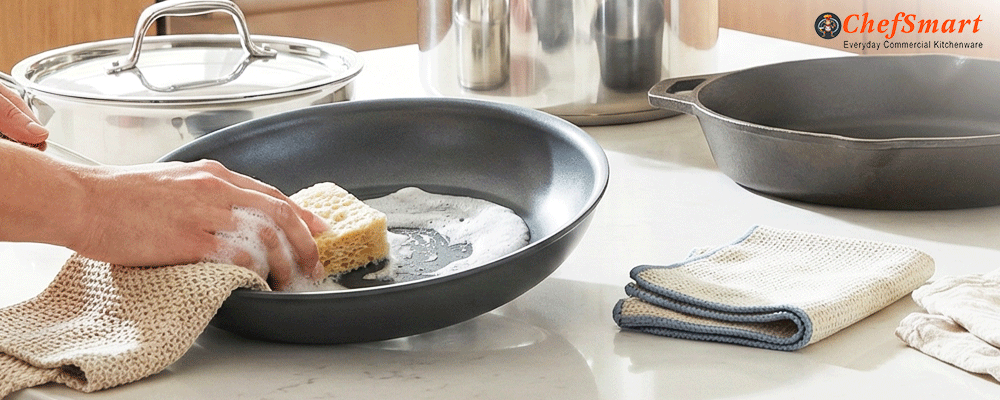
In a commercial kitchen, cookware is subject to conditions that no domestic product is ever designed to handle: repeated thermal shock from stovetop to sink, heavy food residues, cleaning chemicals, and the physical demands of high-volume service. The way your kitchen team cleans and maintains your cookware directly affects how long it lasts, how consistently it performs, and how much you spend replacing it.
This guide is written for hospitality operators, head chefs, and kitchen managers in New Zealand. It covers how to clean and maintain stainless steel, non-stick, cast iron, carbon steel, and other commercial cookware surfaces — and how to build cleaning protocols that protect your equipment investment.
Why Proper Cookware Maintenance Matters in Commercial Operations
The case for rigorous cookware care in a commercial kitchen comes down to three things: food safety, operational consistency, and cost control.
Poorly maintained cookware accumulates carbonised residue, creates uneven heat distribution, and can harbour bacteria in scratches and degraded surfaces. Any of these translate directly into food safety risks and customer experience issues. From a cost perspective, a commercial saucepan or frying pan that is properly maintained will outlast a poorly maintained one by years — the savings across a full kitchen fit-out are substantial.
Stainless Steel: The Commercial Standard
18/10 and 18/8 stainless steel is the workhorse of the commercial kitchen. It's durable, non-reactive, dishwasher-safe, and compatible with all cooking surfaces including induction. Maintaining it correctly ensures it keeps its appearance and cooking performance over high-volume use.
For daily service cleaning, deglaze with water immediately after service where possible to loosen food residue before it sets. Allow pans to cool before washing — thermal shock from a very hot pan into cold water can warp even heavy-gauge stainless steel over time. Commercial dishwasher cycles are suitable for most stainless cookware; hand washing with a non-abrasive scourer is preferable for premium clad or triple-ply lines where surface finish matters.
For built-up carbon deposits — common in busy frying stations — use a stainless steel cleaner or a paste of baking soda and water, left to soak for 10–15 minutes before scrubbing. Avoid steel wool or metal scourers, which will leave scratches that make future cleaning harder and can affect surface integrity. White spots and water marks are calcium deposits from NZ water and can be removed with a weak acid solution (white vinegar or dedicated descaler).
Non-Stick Commercial Cookware
Non-stick coatings in commercial environments require disciplined handling to remain effective. The most common reason commercial non-stick fails prematurely is inappropriate cleaning: metal utensils, abrasive scourers, or high-temperature dishwasher cycles that degrade the coating over time.
Establish a kitchen protocol: non-stick pans are hand-washed only, with soft cloths or nylon scourers, in warm soapy water. For stuck-on residue, fill the pan with water and heat gently on the stove to loosen the deposit — do not scrape with metal. Inspect non-stick surfaces regularly; once the coating shows visible scratching, peeling, or discolouration, the pan should be replaced. A degraded non-stick surface is both a food safety concern and a poor cooking surface.
Stackable storage increases the risk of coating damage. Where space allows, hang non-stick pans or store with pan protectors between surfaces.
Cast Iron in Commercial Kitchens
Cast iron is increasingly common in New Zealand hospitality for its heat retention, searing performance, and front-of-house presentation value. It requires a specific maintenance approach that differs from other cookware.
Never soak cast iron in water and never run it through a commercial dishwasher — moisture causes rust rapidly. Clean immediately after service using coarse salt as an abrasive scrub with minimal water, then rinse quickly and dry thoroughly on a warm stovetop. While still warm, apply a very light coat of neutral oil (canola, rice bran) to the cooking surface and wipe away the excess. This re-seasons the surface and prevents rust.
If rust appears, it's recoverable: scrub with steel wool to remove the rust, wash and dry, then re-season by applying a thin oil coat and baking in an oven at 200°C for an hour. A well-seasoned cast iron pan should have a near-non-stick quality and a deep, even patina.
Carbon Steel
Carbon steel is popular in professional kitchens for its rapid heat response and lighter weight relative to cast iron. It develops a seasoning in the same way as cast iron and requires similar care: no prolonged water contact, hand washing only, and regular re-oiling. Carbon steel is more prone to rust than stainless steel, so kitchen teams should be briefed specifically on its maintenance needs.
Building a Cookware Maintenance Protocol for Your Kitchen
In a commercial kitchen, individual habits aren't enough — you need a documented protocol that every team member follows. A basic cookware care protocol should cover the following: how each pan type is washed and by whom, how pans are dried and stored, when pans are inspected for damage or wear, and the replacement trigger points (e.g., non-stick delamination, warp in base, damaged handles).
Monthly walk-throughs of the pan store as part of your kitchen audit will catch wear before it becomes a food safety issue. Damaged cookware has a cost not just in replacement, but in the inconsistent cooking results and potential food safety liability it creates in the meantime.
When to Replace Commercial Cookware
The signs that a commercial pan has reached the end of its service life: the base has warped and no longer sits flat on the cooking surface; non-stick coating is visibly degraded, scratched, or peeling; handles have become loose, cracked, or no longer oven-safe; stainless steel shows deep pitting or heavy corrosion that cleaning cannot address.
ChefSmart supplies replacement cookware at trade pricing to hospitality operators across New Zealand. If you're auditing your kitchen's cookware stock, contact us for advice on commercial-grade replacements matched to your menu and cooking methods.